
When to fertilize a lawn in Lawrence, KS
Fall is the key feeding for tall fescue and bluegrass in Lawrence. When to fertilize, why July feedings backfire, and how weed control fits in.
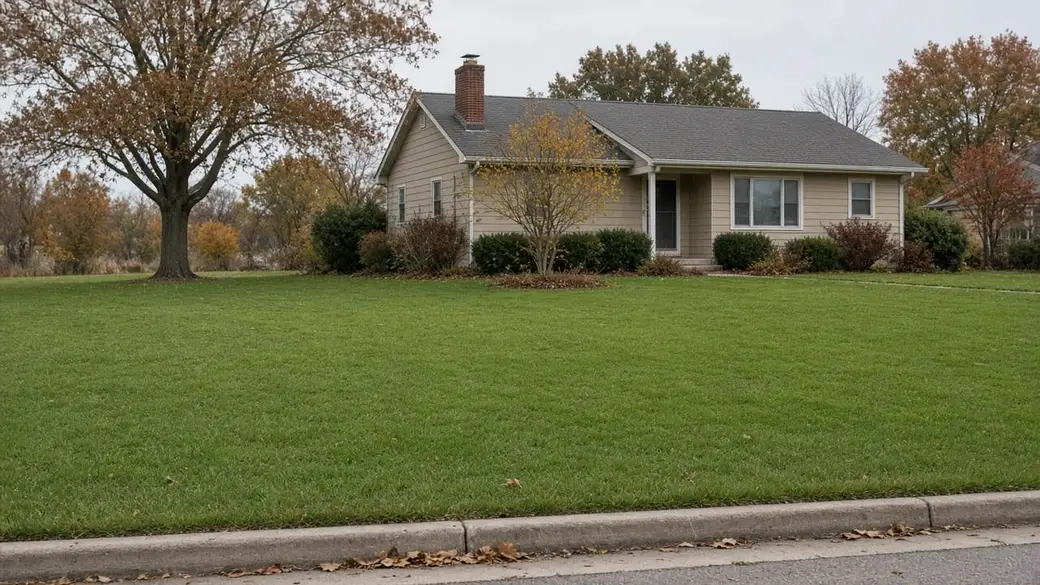
Lawns in Lawrence and Topeka are mostly tall fescue and Kentucky bluegrass. These cool-season grasses grow hard in spring, slow down in July heat, and grow again when nights cool off. A feeding schedule that matches that rhythm puts most of the fertilizer in fall, while the grass is making roots and before the ground freezes. Lawn treatments in Lawrence, KS can put those rounds on a written plan after walking the yard.
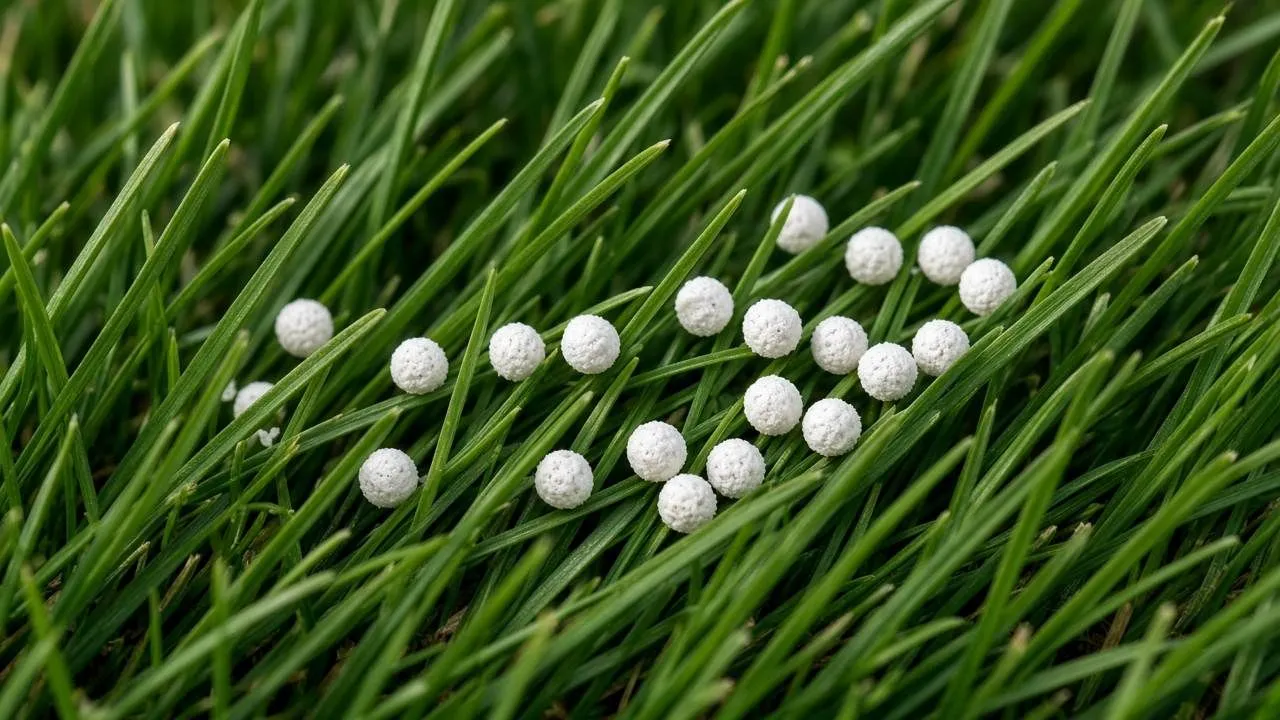
K-State Research and Extension recommends fall fertilizing for these grasses, often in September and again in November, at about one pound of nitrogen per 1,000 square feet each time. A light spring feeding is optional, and many lawns do fine without it.
Why the date on the bag is not your schedule
A bag with a month printed on it is a rough guide. Two lawns on the same street can need different dates: one thin along the curb, another already thick. Look at color, density, and where the pale spots are before choosing a product.
A plan should list the fall feeding, any later winterizer round, the weed control rounds, and whether this year needs aeration. You should see that list before a product goes on the grass.
A lawn that is already even doesn’t need an extra pass. A lawn with a thin stand may get seed along with aeration, and when to aerate a lawn in Lawrence explains how those two fit together.
What fall feeding does
Spring growth on fescue is mostly leaf blades. Fall growth builds roots and stored energy that carry the lawn through winter and into April. That’s why fall is the feeding to keep, and skipping it to catch up in August doesn’t work.
July is the wrong month for a heavy dose. The grass is waiting out the heat, and nitrogen on top pushes soft growth that the next hot week burns. A lawn that looks hungry in July usually needs water, a taller mowing height, or relief from shade.
Mowing height matters more in a hot week than another bag. Keep tall fescue and bluegrass at roughly three inches or a little taller in summer. Lawn care in Lawrence, KS covers the weekly cut. Avoid mowing right after spreading product so the granules stay where they landed.
Winterizer is late-fall fertilizer
A winterizer is the late-fall round, applied after top growth slows and before the ground locks up, often in November. It is still fertilizer, just applied later in the year. If the lawn was fed a few weeks ago and the color is even, a second pass because a store display changed months isn’t needed.
Don’t apply onto frozen ground or onto a lawn buried in leaves. Granules have to reach the soil. Rake or mulch-mow the leaves first, then feed.
Weed control has its own calendar
Fertilizer and weed control do different jobs. A weed-and-feed bag ties them to one date, which is convenient on a shelf and awkward in a yard. Crabgrass preventer (a pre-emergent, which stops seed from sprouting) works in spring, before the crabgrass germinates, usually when the soil is warming up. A broadleaf spray works when the weeds are actively growing and the grass isn’t stressed by heat.
A lawn full of summer weeds won’t be fixed by a fall fertilizer. The weeds need their own timing, and the grass is fed when it can use the food.
When a thin spot is not hunger
A pale patch along the sidewalk is often compaction, a missed sprinkler head, or shade, not a skipped bag. Seed on a tight, dry strip washes to the concrete, so fix the water first. Irrigation and sprinkler repair is the page for a zone that never reaches the curb.
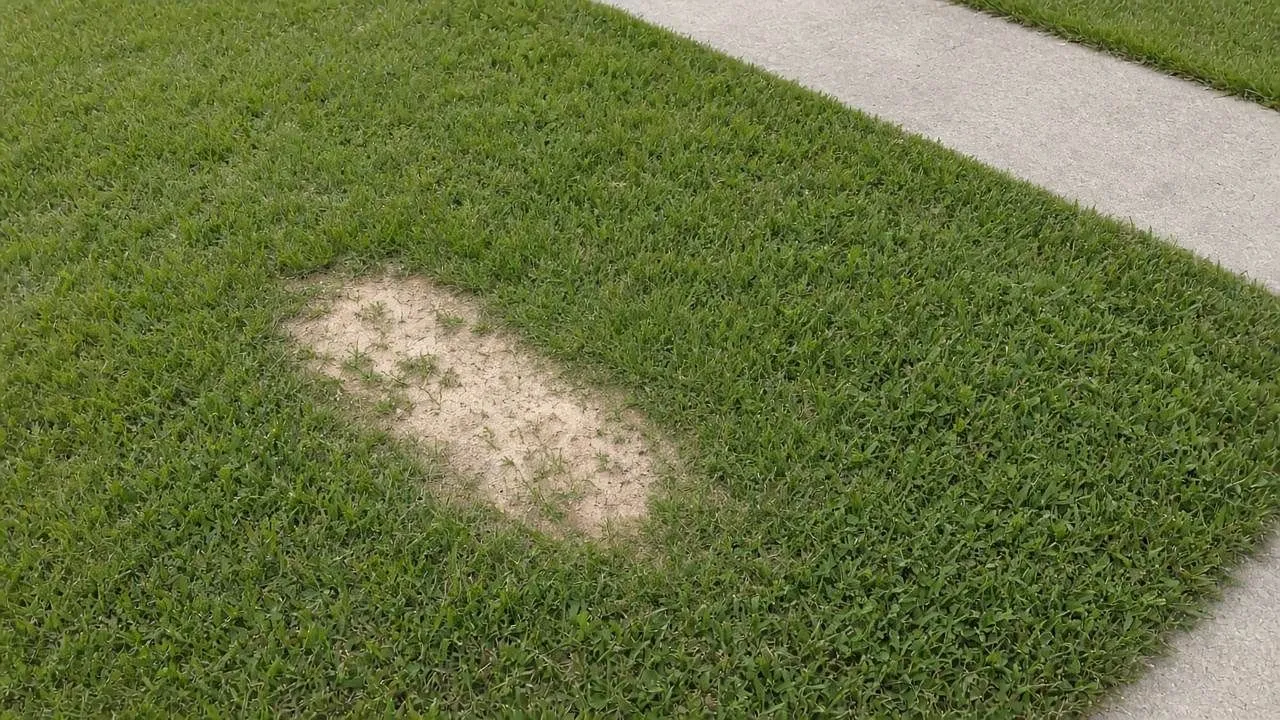
Cores help a packed strip, but they don’t help a strip with no water. Shade under a dense canopy is a separate limit, because fertilizer won’t make fescue thrive where it barely sees light. In that case, feed the open lawn and treat the shaded pocket as a landscaping question.
Seeded lawns and watering
A lawn seeded in fall needs the mower kept high and the new grass watered. Seed needs steady moisture until it is established, whether that comes from the sprinkler system or a hose you run yourself. If the heads don’t reach the seeded area, fix that gap before the seed goes down. One round of fertilizer won’t fill in a dry lawn.
Lawrence and Topeka
The same fall calendar applies in Topeka and around Lawrence. Soil still differs from yard to yard, so walk the lawn before committing to dates.
Free on-site estimates take about fifteen minutes and nobody has to be home. The written plan lists the fall feeding, any winterizer, weed control, and whether cores are needed. You can request an estimate online.
Questions this article usually raises
Should a Lawrence lawn get a heavy feeding in July?
No. Cool-season grass is stressed by heat in July, and a heavy summer dose grows soft blades that the next hot week burns off. Fall is the feeding that counts.
Is weed and feed one visit?
It can be sold that way, but fertilizer and weed control work best on separate dates. The right time for each is different.
Will one fall feeding fix a brown strip along the curb?
Not if the strip never gets water. Fix the sprinkler first, then judge whether the grass needs more food.
Services in this article
Relevant service areas
Keep reading
- When to plant grass seed in Lawrence, KS Grass seed in Lawrence goes down in fall, in the holes from aeration, while tall fescue is still growing. Seed on a tight, dry strip washes to the sidewalk.
- When to aerate a lawn in Lawrence, KS Core aeration for tall fescue and bluegrass lawns in Lawrence works best in fall, from September into October. How to time it and when to skip it.
- A lawn care schedule for Lawrence, KS A Lawrence lawn schedule splits mowing, weed control, aeration, and the fall feeding into separate visits, with dates set after a walk of the yard.