
Ice melt on concrete in Lawrence, KS
How to use ice melt on Lawrence steps and walks without damaging concrete or killing grass: which products to choose, how much to use, and where it goes.
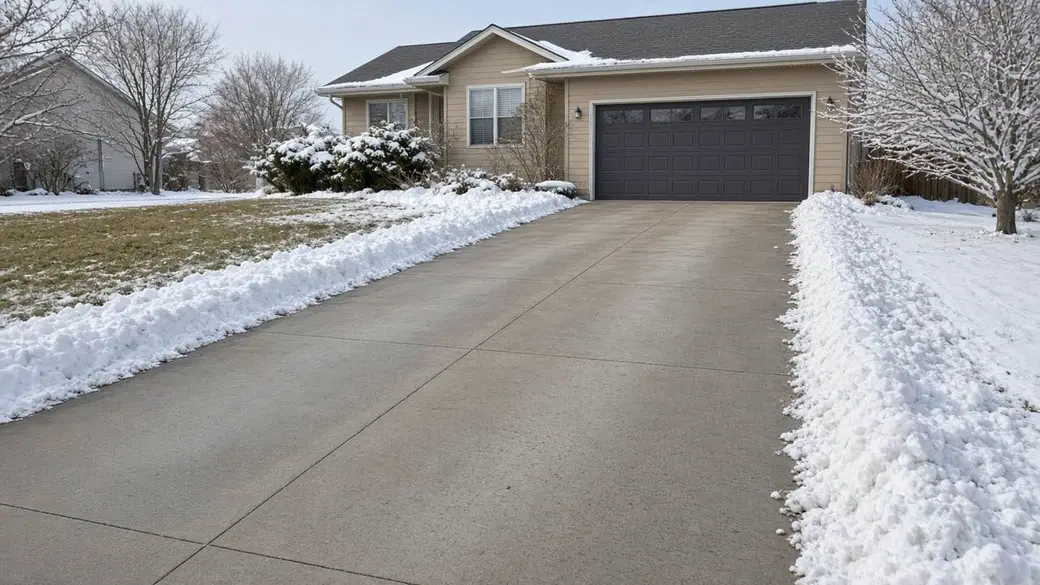
Ice melt belongs on the concrete people walk on. Used lightly, it makes steps safe. Used heavily, it can flake the surface of the concrete and leave dead stripes in the lawn that show up in April. Snow removal in Lawrence, KS clears the driveway, the front walk, and the steps listed on the quote, and the open lawn is left alone.
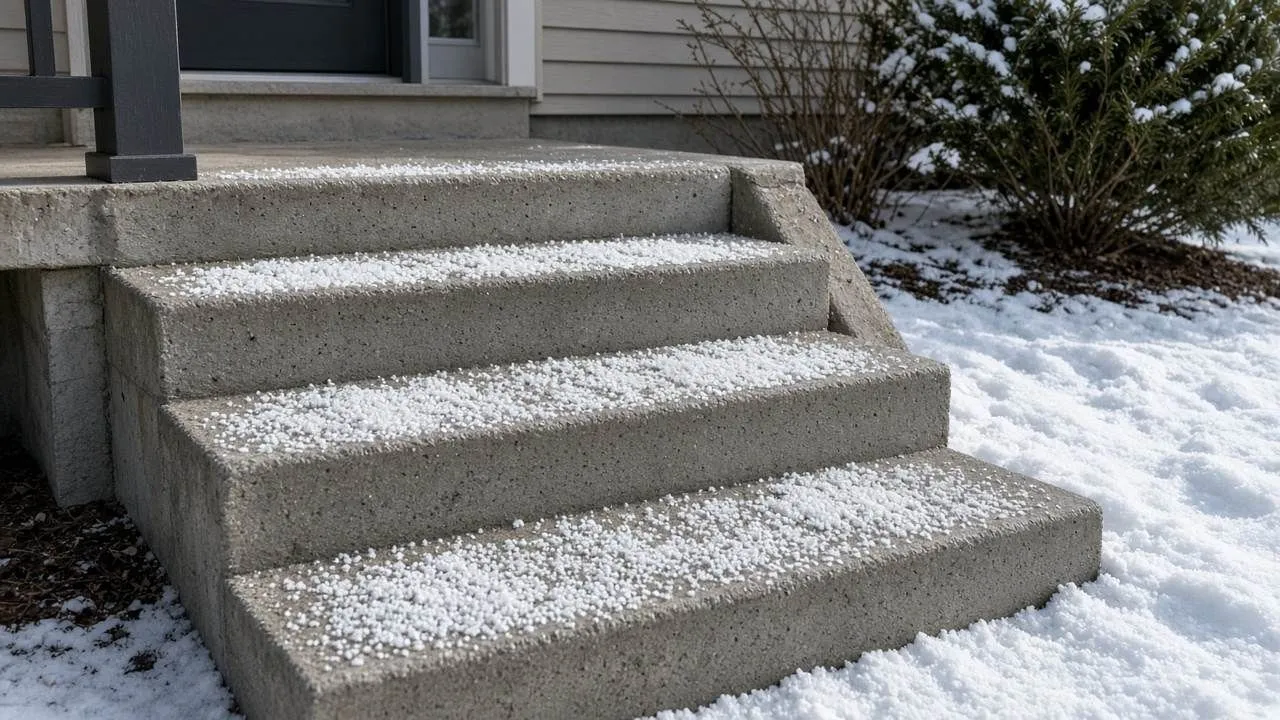
Which ice melt products are safe for concrete
The ingredient matters more than the brand. Common choices:
- Rock salt (sodium chloride) is cheap and works down to about the mid teens Fahrenheit, but it is hard on plants.
- Calcium chloride works at much lower temperatures and acts faster, though it costs more.
- Magnesium chloride is gentler on plants and works at lower temperatures than rock salt.
- Potassium chloride is milder, but it works slowly and only in moderate cold.
Avoid products with ammonium nitrate or ammonium sulfate, which attack concrete chemically. Concrete poured within the last year or two is more vulnerable, and many contractors suggest sand for traction on new slabs. The bigger damage comes from freeze and thaw: meltwater soaks into the surface, refreezes, and flakes it. The less water sitting on the slab, the better.
Clear the snow before you melt the ice
Melt works on thin ice, not on a thick layer of snow. Shovel or plow first, then treat what is left. Salt spread on four inches of snow gets wasted and washes onto the grass.
A thin glaze on a cleared walk calls for a light, even scatter. More than that is wasted. Sweep up any leftover granules after the ice melts.
Refreezing is common after a Lawrence storm. A walk cleared at dawn can glaze again by evening if meltwater sits on it. If you are hiring the work, ask whether a same-day return visit is on the quote.
Where to pile the snow
Cleared snow needs somewhere to sit. Pile it along the side of the drive or the walk, not in a ridge across the lawn and not against the sprinkler shutoff. A valve buried under a pile causes trouble during the next thaw.
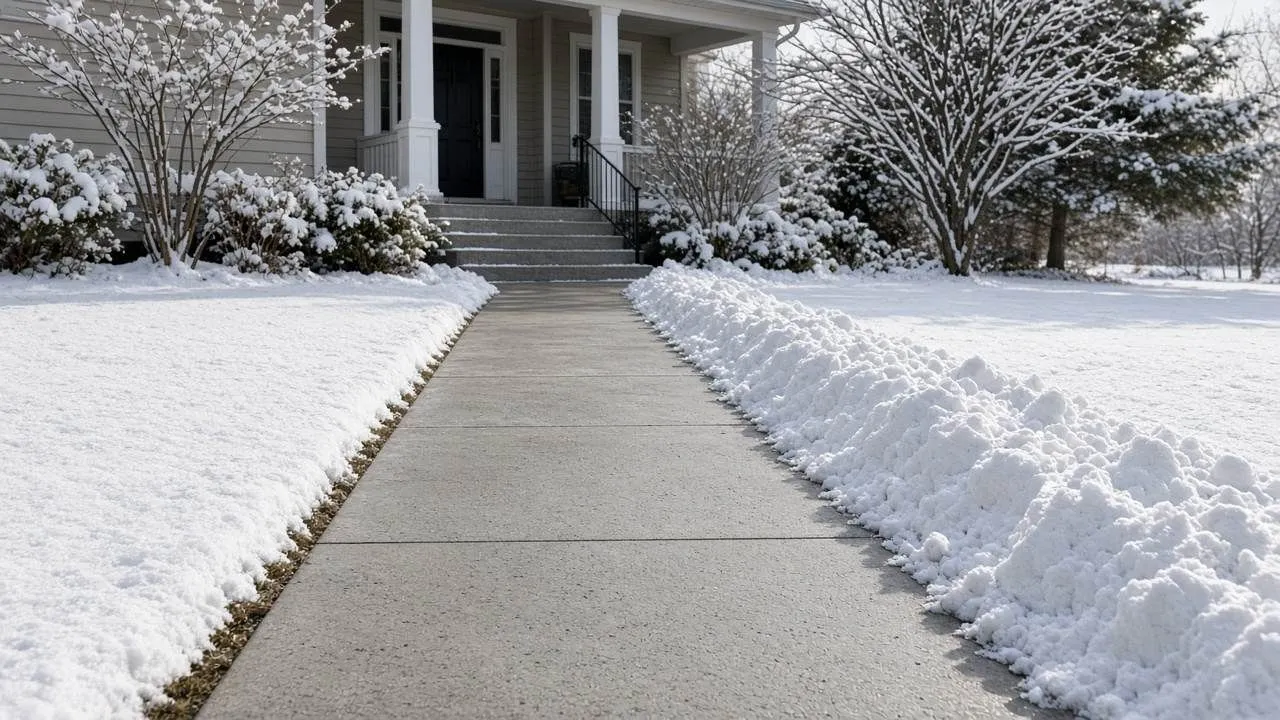
Don’t push snow onto a neighbor’s drive to make the pile disappear. If space is tight, settle where the pile goes before the season starts, not at 6 a.m. after a storm.
The pile is also where salt damage shows up in spring. Snow mixed with melt and dumped on grass carries salt straight into the lawn. Keep salted snow on concrete or gravel, and keep beds clear unless you have agreed to let a pile sit there.
What salt does to grass in April
A salted lawn looks fine under snow. In April the stripes follow the scatter and the pile line. Salt pulls water out of grass roots and can leave the soil too salty for seed to sprout, which is why dead strips recover slowly.
Lawn treatments can help with feeding and weed control, but they can’t green a strip that has been burned. Seed on that strip has to wait until the soil can be worked in spring, and flushing the area with water helps wash the salt through.
That is why the open lawn is left alone during a storm. Footpaths on grass ice over and melt off by themselves, while salt can scar the grass for the whole season.
If a neighbor or a previous crew already salted the parking strip, flag it so the plan keeps melt on the steps and landing.
What the quote names
A snow removal quote lists the surfaces: a driveway, a front walk, the steps, and a side walk to the gate if you want it. A surface that isn’t on the page isn’t cleared and billed as an extra because the truck happens to be there.
Free on-site estimates take about fifteen minutes and nobody has to be home. A small lot or a commercial apron goes on the quote if it is part of the job. If the property needs an early arrival or a gate opened before the walk can be reached, write that down too. If a gate is locked, the stretch behind it waits.
Winter service in Topeka
Topeka follows the same plan as Lawrence: the quote lists what gets cleared, and each storm follows that list without a second call.
Beds and sprinklers in winter
Sprinkler blow-out is a fall job, and it should be done before a snow pile can hide the shutoff. How sprinkler winterization works explains that visit, and the irrigation page covers the service. If the box is unmarked when snow starts, stay clear of it and don’t dig for it with a shovel during a storm.
Limbs on the drive can be moved if they block the surface that was priced. Tree work is not part of a snow visit.
Mulch and new edging wait until the ground is open again, and when to mulch explains the timing. If the pile stayed off the lawn and salt stayed on concrete, the grass comes back on its own.
The phone number is (785) 377-5741, Monday to Friday, 8 to 5. You can also contact us online.
Questions this article usually raises
Do you salt the whole lawn after a storm?
No. Ice melt goes on steps and landings. Salt on open lawn shows up as brown stripes in April.
Do I have to call again after the first storm?
No. The quote names the driveway, the front walk, and the steps, and each storm follows that list.
Does ice melt replace plowing the driveway?
No. Melt is for the thin ice left on steps and landings. The snow gets cleared first.
Services in this article
Relevant service areas
Keep reading
- Front yard landscaping in Lawrence, KS How to plan a Lawrence front yard bed: where to put the edge, which plants fit under the windows, how deep to mulch, and what to water in the first summer.
- Landscape edging in Lawrence, KS Why steel edging beats plastic in Kansas freeze and thaw, how to tell a recut from new steel, and what to do with old edging before you add mulch.
- A lawn care schedule for Lawrence, KS A Lawrence lawn schedule splits mowing, weed control, aeration, and the fall feeding into separate visits, with dates set after a walk of the yard.